Dolphin and Whale Watching Tenerife: Can You See Whales?
Yes — Tenerife is one of the few places in Europe where whales are resident rather than passing through. A group of short-finned pilot whales, officially estimated at about 362 animals, feeds in the deep channel between Tenerife and La Gomera all year, together with bottlenose dolphins. The operators report pilot whales on about 99 % of their trips; that is their own figure, not a guarantee.
The reason is depth close to shore. Off the south-west coast the sea floor falls to about 1,000 m within a few kilometres, and the pilot whales dive there for squid, so a boat reaches them in 18 to 35 minutes depending on the port. That short run is why even a 90-minute trip works, and why the island’s waters became Europe’s first Whale Heritage Site in January 2021.
What you see beyond the two residents depends on luck and the season. Spotted dolphins, Bryde’s whales, sperm whales and the big migrating rorquals all turn up, but on some trips rather than most; the chapters below take them one at a time, from the animals you will almost certainly meet to the ones that make a lucky day.
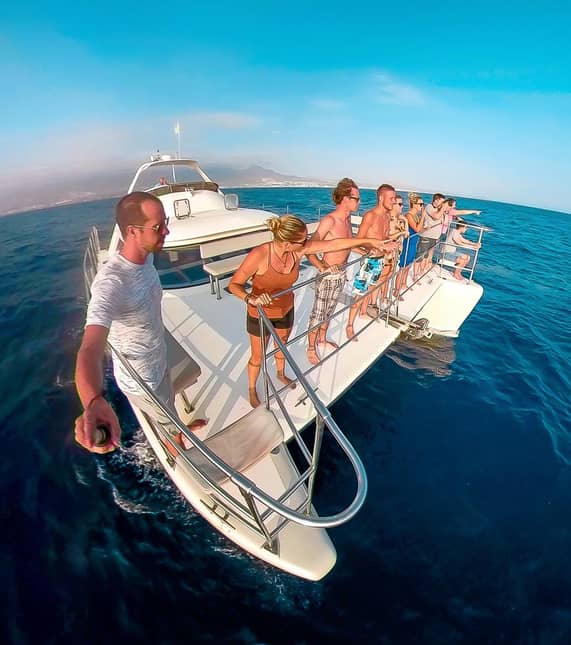
“The experience was incredible! Our captain was very nice and competent. We were able to observe pilot whales, dolphins, turtles, and flying fish, and we learned a lot from the explanations.”
Whale Watching Tenerife Pilot Whales
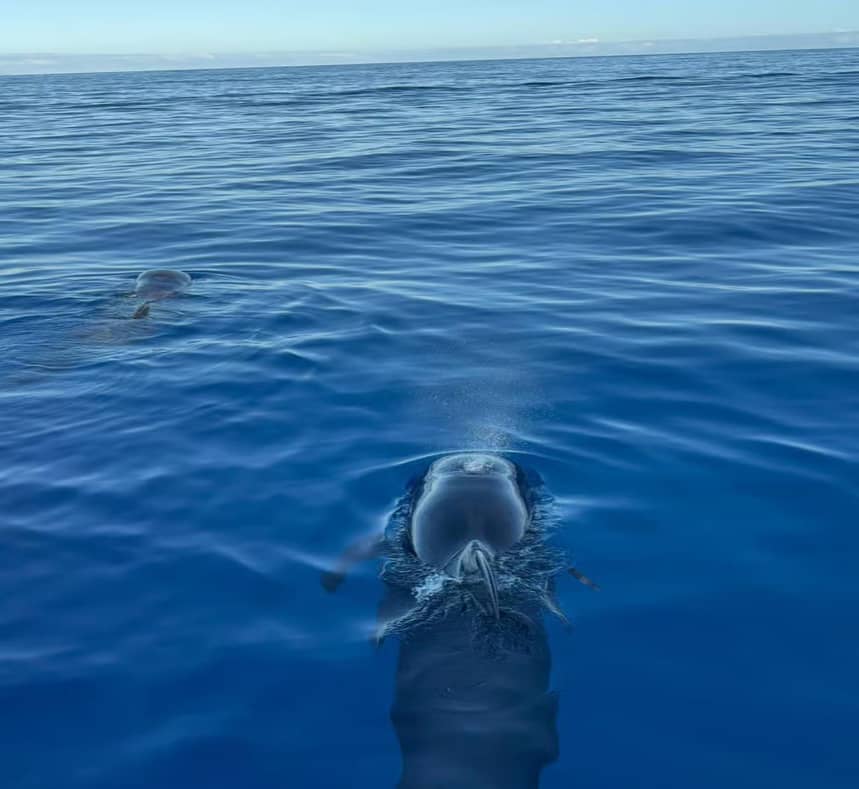
The short-finned pilot whale is the whale of Tenerife. It is a large, all-dark dolphin with a rounded, bulbous head and a low, broad dorsal fin set well forward on the back, and it lives in close family groups led by older females. Off the south-west coast you usually find them resting at the surface between dives, often with calves, close enough to see without binoculars.
What they do at the surface
Much of what you see is rest. Pilot whales hunt squid at depth, often at night, and spend the daylight hours logging — lying still in a line at the surface — or travelling slowly in tight groups. Now and then one lifts its head clear of the water to look around, which guides call spyhopping, and calves stay pressed against their mothers’ flanks.
Why they stay
Studies that photograph and re-identify individual fins have shown that many pilot whales off Tenerife are true residents, seen year after year, while others visit. That is why the Teno-Rasca strip of sea, about 69,490 hectares from Buenavista to Arona, is a special area of conservation, and why licensed boats must keep 60 m away and stay no longer than 30 minutes with a group.


Whale Watching Tenerife Dolphins
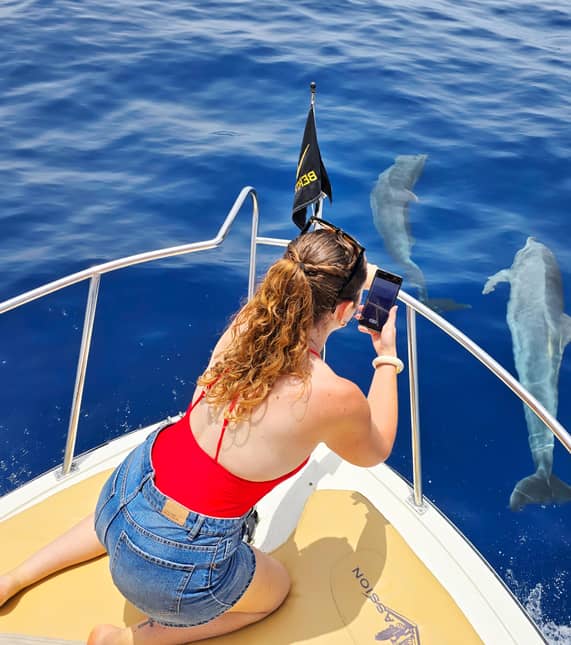
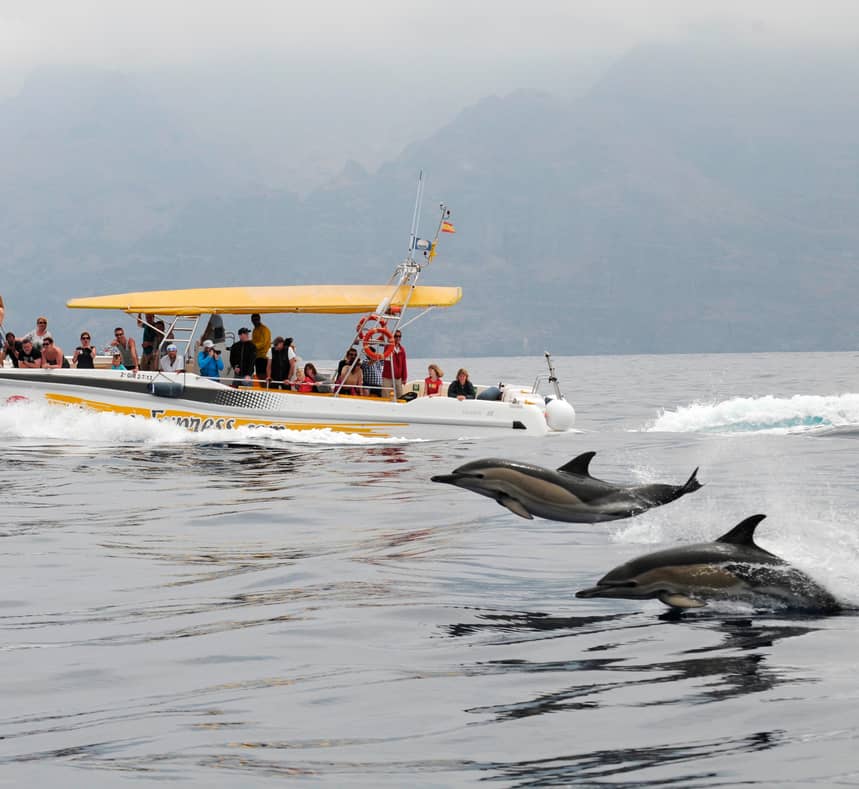
Bottlenose dolphins are the second resident and the dolphin you are most likely to see: grey, robust, with a short beak and a tall curved fin, seen on more than 70 % of trips by the operators’ count. Atlantic spotted dolphins join them most often from March to May, when they ride the bow, and common, striped, Risso’s and rough-toothed dolphins turn up on a minority of trips.
Dolphins behave very differently from the resting pilot whales. Bottlenose groups often travel fast, and spotted dolphins love a bow wave, which is the one situation in which a boat may keep moving slowly while they ride it. Risso’s dolphins are pale and scarred with white lines, and look almost white at the surface once they are old.
Dolphins are also where the swim rules are most often tested. Under Decreto 178/2000 nobody may swim or dive within 500 m of whales or dolphins, and no boat may feed them, so the snorkel stop on your trip happens in a cove away from the animals. A crew that puts swimmers in the water with dolphins is breaking the law.
Dolphin Whale Watching Tenerife: How to Tell Them Apart
Most sightings come down to four questions: how big is the animal, what colour is it, what shape is the dorsal fin and where on the back does it sit, and what does the blow look like. Pick a species below for the marks guides use on board, when it is seen and how often, and the boat that gives the best chance of it.
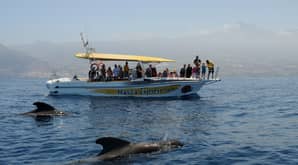 Pilot whales logging at the surface
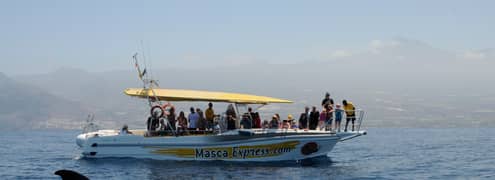 Pilot whales logging at the surfacePilot whales logging at the surfacePilot whales logging at the surface
 Bottlenose dolphin surfacing
 Bottlenose dolphin surfacing
 Spotted dolphins on the bow wave
 Spotted dolphins on the bow wave
 Bryde’s whale blowing
 Bryde’s whale blowingSperm whale lifting its flukesSperm whale lifting its flukesFin whale at the surfaceFin whale at the surface
Photographs help afterwards. A clear side-on shot of the dorsal fin, with its nicks and scars, is how researchers identify individual pilot whales and bottlenose dolphins, and some operators share their photos with local research groups. Burst mode and a fast shutter speed matter more than a long lens, because the animals are usually within a hundred metres.
Next: Seasonal visitors ↓Whale and Dolphin Watching Tenerife: Seasonal Visitors
Beyond the two residents, the larger whales come and go. Bryde’s whales, a tropical rorqual, are seen most often from March to May; fin and sei whales pass on their migrations in winter and early spring; sperm whales appear on a few days a month. Humpback, blue and minke whales and orcas are rare enough that a sighting makes local news.
The rorquals: Bryde’s, fin and sei whales
These are the long, slender baleen whales, much bigger than a pilot whale, with a small fin far back on the body and a tall blow you can see from a distance. Bryde’s whales have three ridges on top of the head; fin whales have a white right lower jaw. Boats rarely plan a trip around them, but on a long trip the guide watches for blows on the horizon.
Sperm whales
The sperm whale is the deep diver of the channel, with a square head, a wrinkled back and a bushy blow angled forward and to the left. They dive for up to an hour, so a sighting is often a single long look at the surface before the tail flukes rise and the whale disappears. Operators report them on a few days a month, most often in spring and autumn.


Whale and Dolphin Watching Tenerife: Turtles, Flying Fish and the Rest
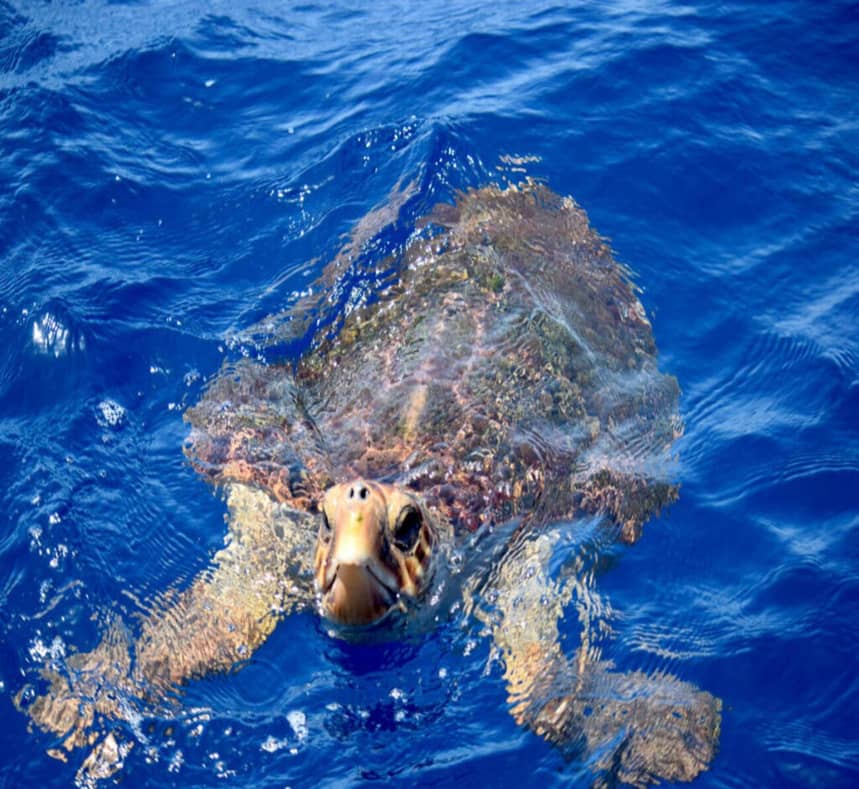
Sea turtles are the bonus most people talk about afterwards. The loggerhead, mostly juveniles, is the turtle seen most often off the south coast, all year, and 25 of the 244 latest reviews we read mention one. Flying fish skimming away from the bow come up in 11, and the odd shark or ray turns up in a lucky few.
Loggerheads cross the Atlantic as juveniles and feed around the Canary Islands for years before returning to the beaches where they hatched, so most of the turtles you see are young animals resting at the surface. If one appears near the swim stop, the same rule applies as with the whales: watch it from where you are, do not touch it and do not follow it.
“We saw pilot whales and sea turtles so amazing. There was shade and enough seats for everyone to see. When we went for a swim it was easy to get back on the boat with their good ladder.”
Litter is part of the story too. Several reviews mention guides fishing plastic out of the water on the way, and the Whale Heritage Site status asks operators to take part in exactly that kind of conservation work. It is a small sign, but a useful one, that a crew takes the animals seriously and not only the photographs.
Next: Which boat ↓Whale and Dolphin Watching Tour Tenerife: Which Boat to Book
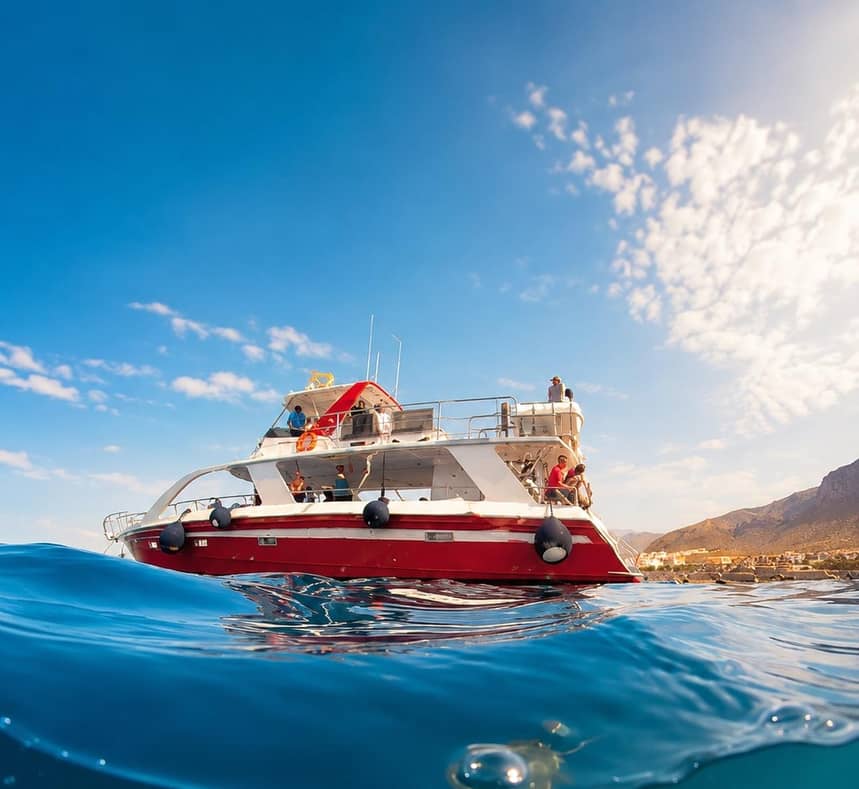
For the widest range of species, book a longer trip: this guide’s pick, the eco-cruise catamaran from Puerto Colón, spends three to five hours at sea, which gives the guide time to look beyond the resident pods. For the pilot whales alone, a two-hour boat from Los Gigantes is the shortest run, and the 90-minute eco-yacht from Los Cristianos is the steadiest ride.
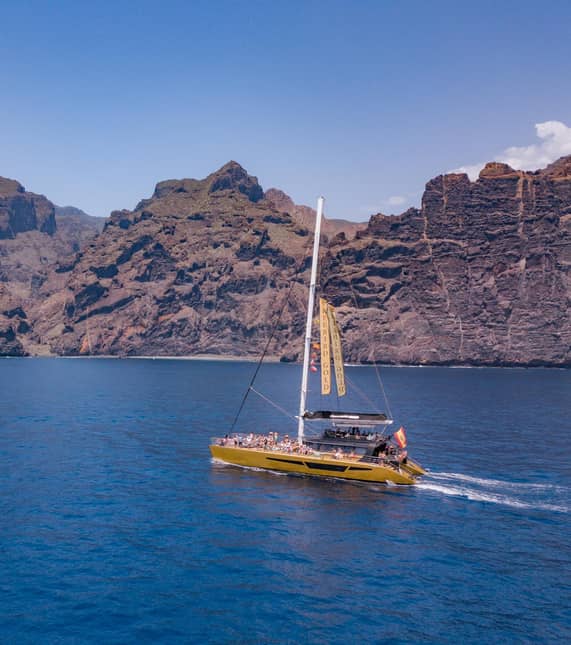
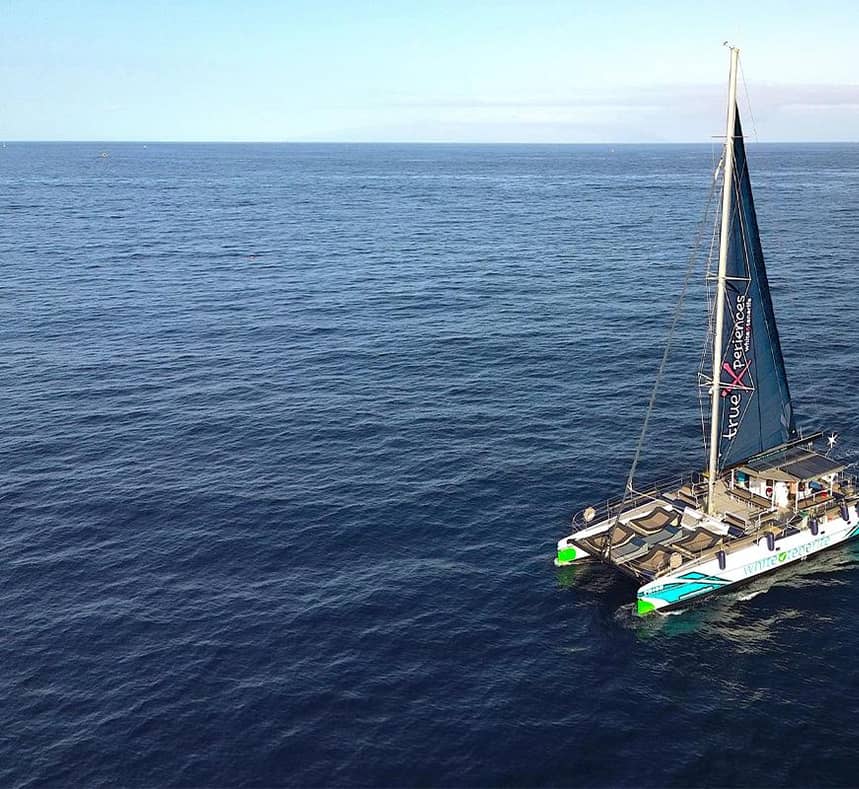 Catamaran at sea
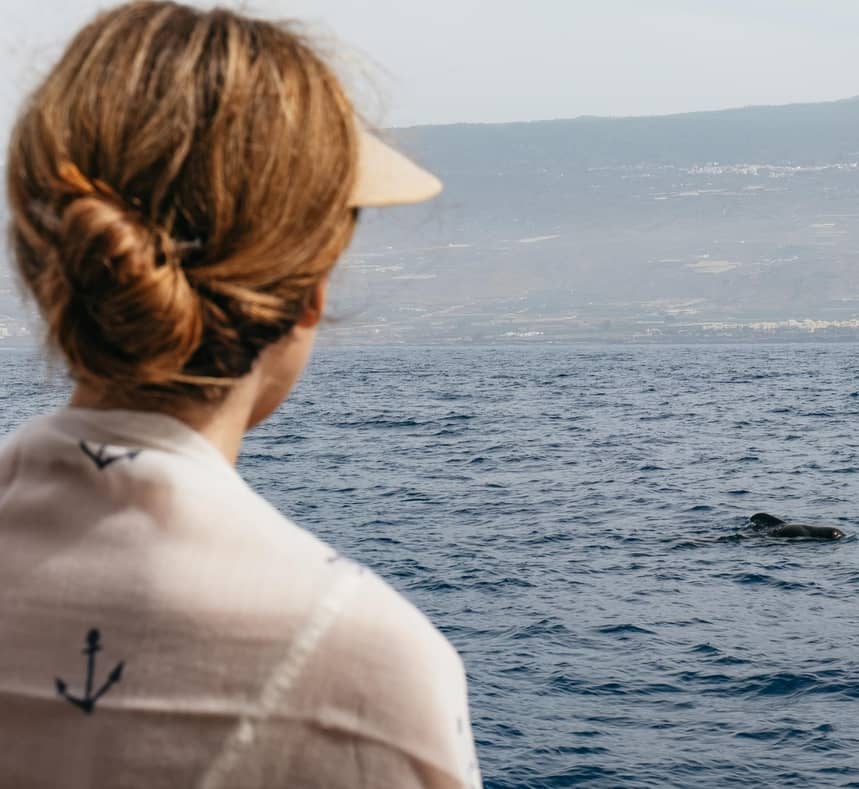
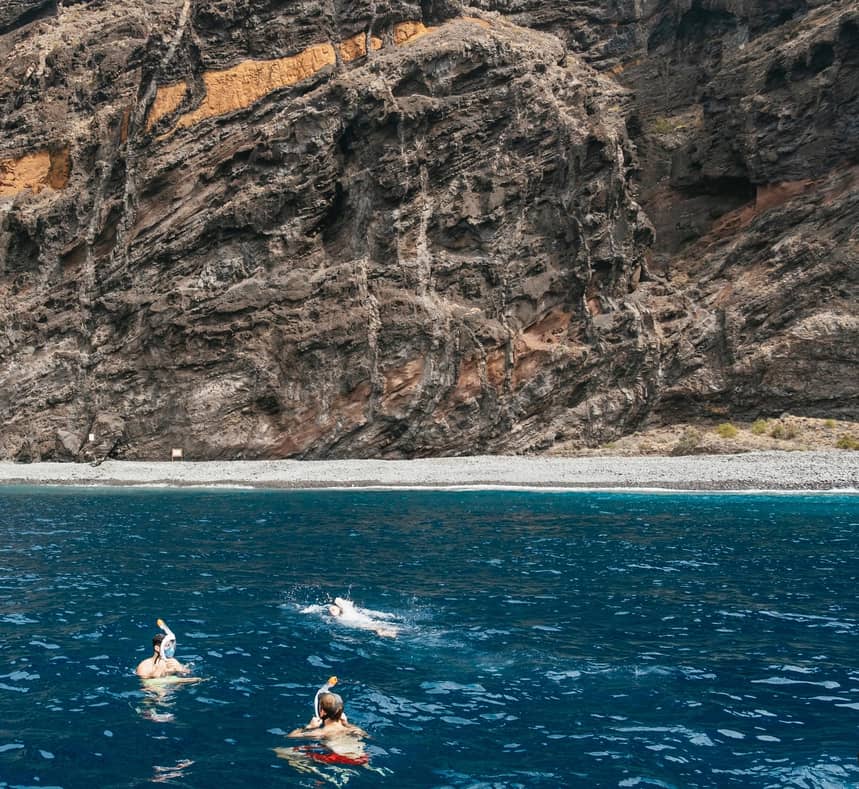
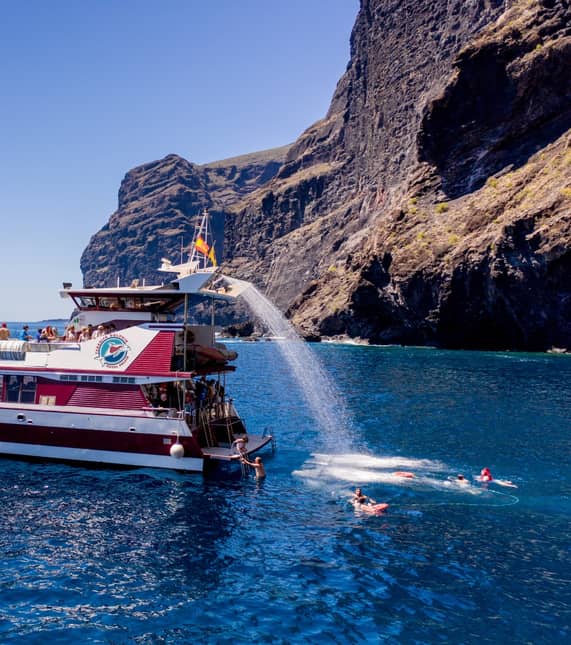
 Motor boat under the cliffs

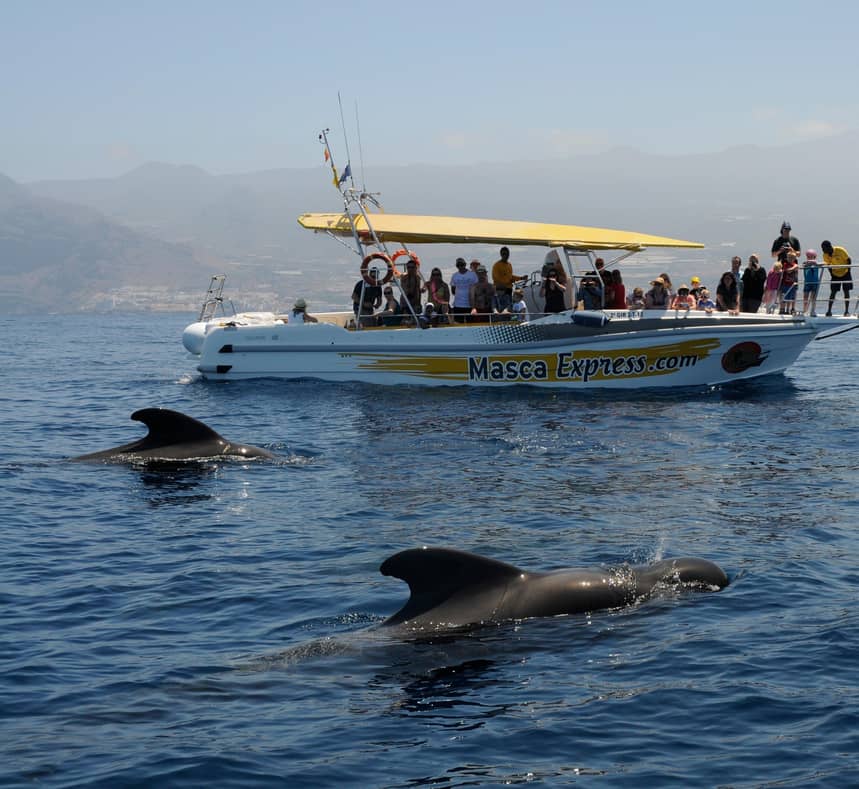

 Eco-yacht off Los Cristianos